
General Description
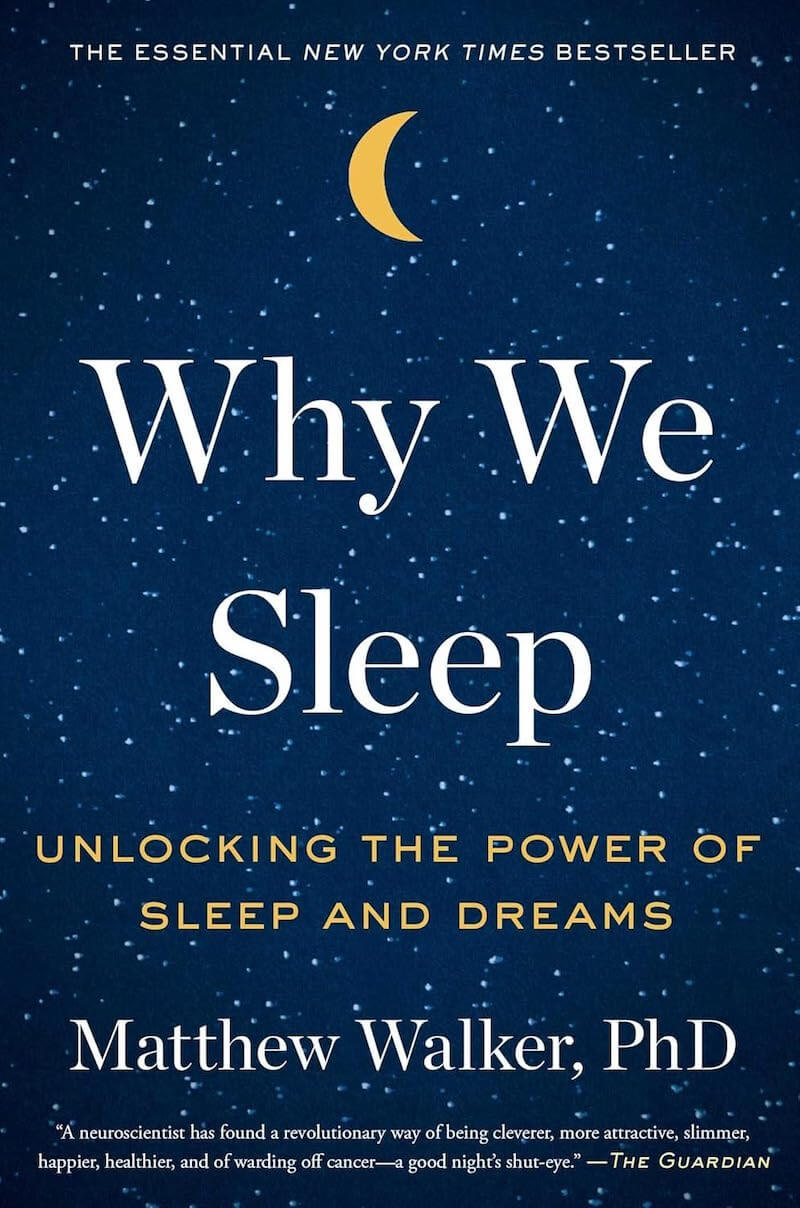
Matthew Walker's book is a popular science exploration of sleep, in which the author consistently reveals its importance for the brain, the body, and quality of life. The book's structure is built so that each chapter logically deepens the understanding of the topic — from basic mechanisms to the global consequences of sleep deprivation.
The first chapters examine the nature of sleep and its evolutionary role. Walker explains why sleep has been preserved in all species despite apparent vulnerability, and how circadian rhythms are formed, including the work of the suprachiasmatic nucleus. The author then details the stages of sleep — NREM and REM, their differences and functions, as well as their impact on memory, learning, and emotional state.
Separate chapters are devoted to the effects of sleep on the brain: they describe the mechanisms of information consolidation, the role of sleep spindles, and the processes of brain "cleansing" through the glymphatic system. Walker shows that sleep is an active biological process necessary for maintaining cognitive functions.
A significant part of the book is devoted to the consequences of sleep deprivation. The author analyzes the connection between sleep and cardiovascular diseases, diabetes, obesity, cancer, and mental disorders. Social aspects are also considered: the culture of sleep deprivation, early work schedules, the impact of technology and light on sleep quality.
The final chapters provide practical recommendations for improving sleep: from routines and conditions to giving up bad habits. The book leads to an important conclusion — sleep is the foundation of health and productivity, and ignoring it has long-term consequences.
Opinion
Another good book that, thanks to a scientific approach, explains the importance of sleep in accessible language. The level of difficulty of this book is about average. It contains terms such as suprachiasmatic nucleus, sleep spindles, glymphatic system. Actually, these were terms that were somewhat new to me. However, the book also had a lot that was already well-known: deep sleep, REM phase, and so on.
Much attention is paid to physiological and psychological diseases that are associated with sleep and have a negative impact on the body. The topic of larks and owls, social prejudices, evolution, comparison with other living species, and much more is covered in this book. I definitely recommend reading it!