
General description
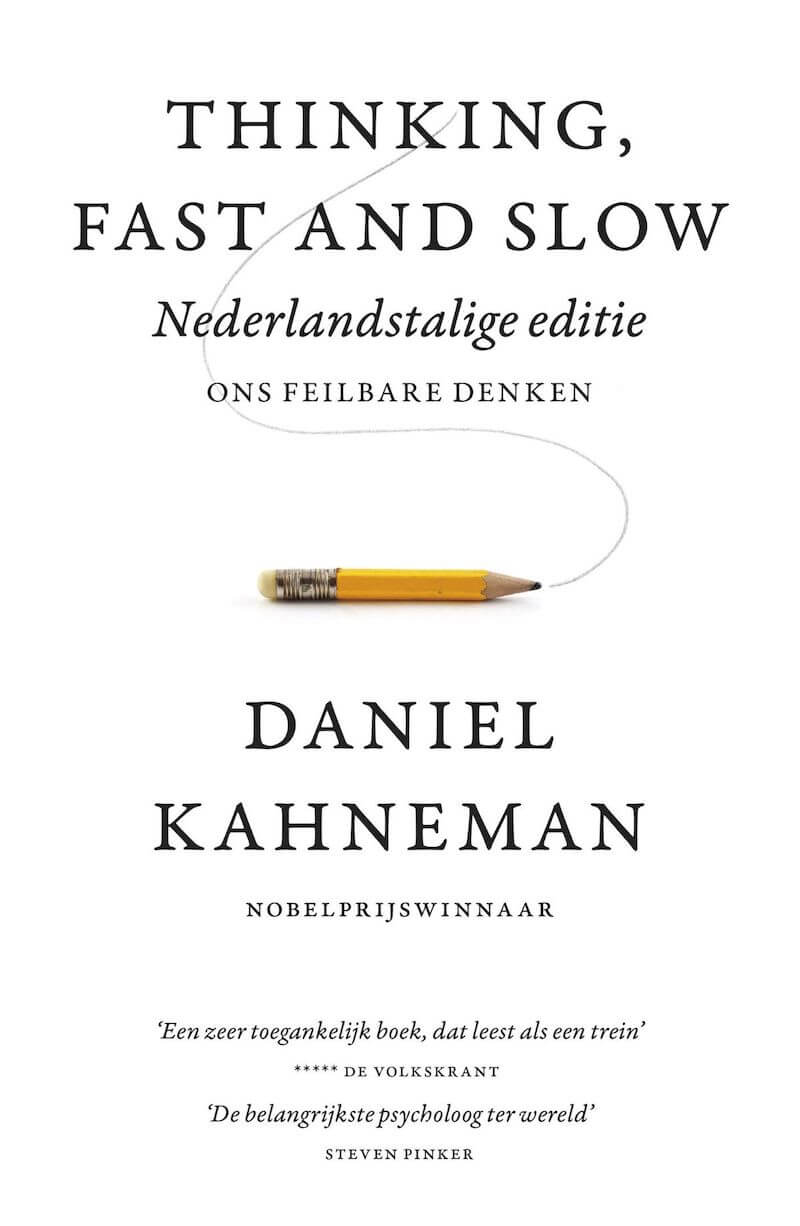
The book «Thinking, Fast and Slow» is devoted to studying how a person makes decisions and why our thinking often leads to systematic errors. Its author is Daniel Kahneman, Nobel Prize laureate in Economics, one of the founders of behavioral economics. In the book, he summarizes decades of research in psychology and decision-making.
The central idea of the book is the existence of two thinking systems. System One works quickly, automatically and intuitively — it helps to instantly react to events and make decisions without deep analysis. System Two, on the contrary, is slow, analytical and requires concentration. It is responsible for logical reasoning, calculations and complex mental tasks.
Kahneman shows that in everyday life people more often rely on the fast thinking system, which often leads to cognitive biases. The book examines in detail such phenomena as overconfidence, availability and representativeness heuristics, as well as forecasting errors. Special attention is paid to how people perceive risk, estimate probabilities and make financial decisions.
Most of the book is devoted to experiments and studies that demonstrate how predictable human thinking errors can be. These ideas formed the basis of behavioral economics and have had a significant impact on research in economics, politics, marketing and management.
Opinion
The book is about how we make decisions and think when making decisions. The author describes how our thinking and intuition are very often subject to errors and biases. We often do not want to believe in probability theory and statistics at all, choosing not the most correct decisions, trusting our intuition. We do not take into account regression to the mean, and we can very often be influenced by various anchors that were intentionally or accidentally imposed on us during decision-making. Kahneman describes these and other techniques in this book. In terms of perception, the book seemed to me somewhat difficult and at times boring — perhaps because I am not very interested in and do not love psychology, or perhaps because mixing psychology with probability theory and statistics is quite a perversion.