
General Description
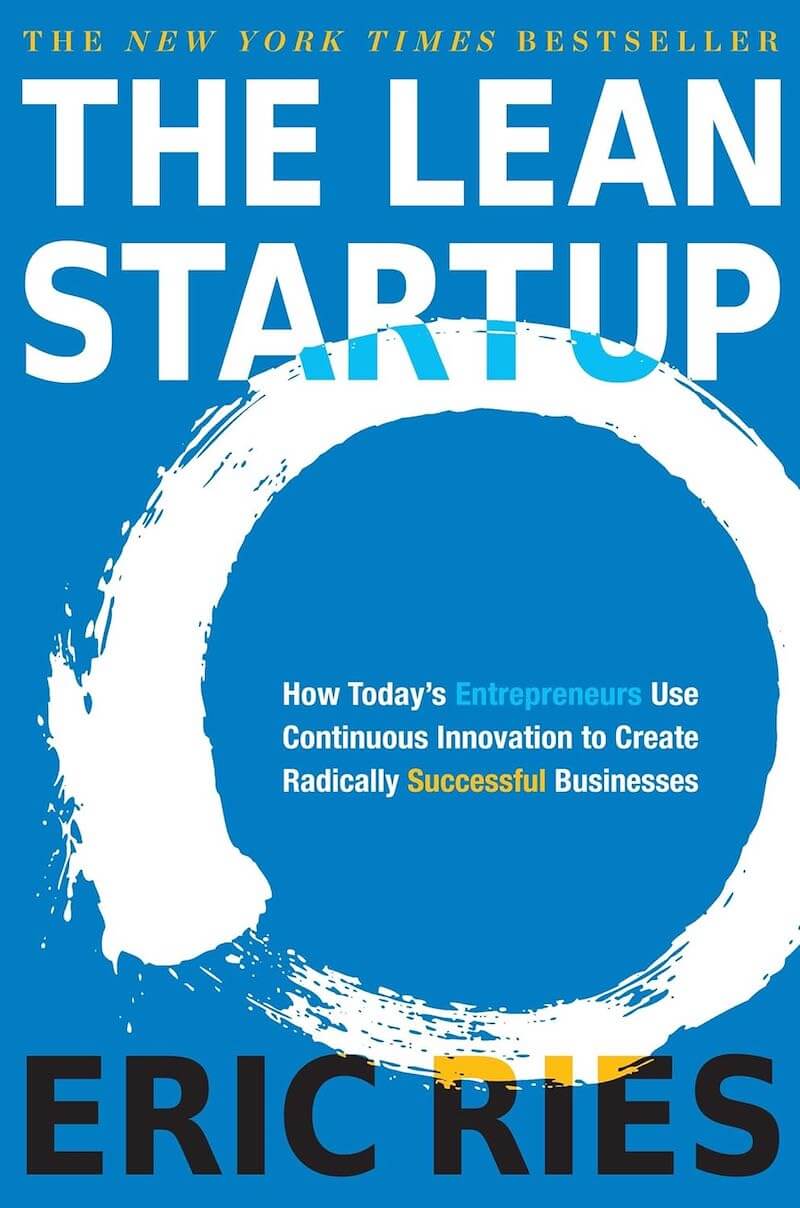
A book consisting of three parts, which include 12 chapters. It has almost no images or any material other than text. It reads easily and quickly. There is an audiobook version.
Brief Summary
Chapter 1. Start
Chapter 2. Definition
Chapter 3. Learning
Chapter 4. Experiments
Chapter 5. Leap
Chapter 6. Testing
Chapter 7. Evaluation
Chapter 8. Pivot
Chapter 9. Pivot
Chapter 10. Growth
Chapter 11. Adaptation
Chapter 12. Creating Innovation
Main Theses
Here are the main theses and ideas of this book:
- A startup does not equal a small version of a big company. A startup is an organization creating a new product or service under conditions of extreme uncertainty. Size doesn't matter: a corporation can also be a startup. The main problem is uncertainty, not lack of resources. Therefore, classic business planning doesn't work here. A startup searches for a model, a business scales the found one.
- The goal of a startup is not the product, but learnability. That is, not to make a "perfect product", but to find out as quickly as possible what the user actually needs. The product is merely a tool for gaining knowledge. Success is measured not by a "release", but by validated learning. Every step should answer the question: "What did we learn?"
- The Build → Measure → Learn cycle is the main idea of the book.
Build. Create a minimal artifact that can be shown to a user.
Measure. Collect data on the behavior of real users.
Learn. Must answer the main question: are we moving in the right direction? Or is it time for a pivot? - MVP is not a stripped-down product, but a minimal experiment. MVP (Minimum Viable Product) is the most often misunderstood part. An MVP is not a "poorly made product". It's the minimal way to test a hypothesis. The criterion for an MVP: can you learn something from it?
- Hypotheses are more important than ideas. Ries suggests viewing a business as a set of hypotheses. Two key hypotheses:
- Value hypothesis. (Does the user really need this problem/feature?)
- Growth hypothesis. (How will the product scale?)
Until the hypotheses are tested — everything else is an illusion of progress.
- Metrics: not vanity metrics, but actionable ones. Ries harshly criticizes classic metrics, such as:
- number of users,
- page views,
- total number of registrations.
At the same time, he urges looking at other metrics: - cohort analysis,
- conversion,
- retention,
- reuse,
funnels.
One must adhere to the principle: a metric should help make a decision, not just look good.
- Accounting for Innovation. One of the most "unnoticed", but important ideas in the book. Startups need their own accounting system:
- define a baseline metric;
- run experiments;
show that changes actually improve metrics.
Based on the analysis, decide whether to persevere or pivot.
- Pivot is not a failure, but a managed turn. It's a structured change in strategy without changing the vision.
Types of pivots:
problem pivot,
- solution pivot,
- customer segment pivot,
- channel pivot,
- monetization pivot,
- technology pivot.
A pivot does not mean chaos. A pivot is based on data, not emotions.
- Growth is also a hypothesis. Ries identifies three engines of growth:
- Viral. Users bring users.
- Paid. LTV > CAC — scaling is possible.
- Sticky (retention). Users stay and return.
You cannot effectively use all at once. You need to choose one dominant one.
- Lean is not about saving money, but about focus. A common mistake: Lean is doing things cheaply. But in fact, Lean means not spending resources on things that don't provide learning. You can spend a lot of money — if it accelerates the learning loop. You can be "lean" and still move blindly.
- A culture of experiments is more important than heroism. A startup is a system, not a feat. You can't rely on a "genius founder". You need to build processes where mistakes are cheap and fast.
Opinion
Although the book doesn't give clear formulas for success, it at least answers questions about how not to do things. Until recently, I believed that even an MVP version had to be tested for all nuances and details, and that showing a poorly working product to users was very bad. The author, on the contrary, says that an MVP should not possess super-high quality and that the main purpose of an MVP product is to check whether you are developing in the right direction or not. Another important thought I definitely took from this book is that everything always needs to be tested in terms of feedback, to, again, understand whether users need these features or not. So I can credit this book as a positive, and therefore recommend it to others.