
General Description
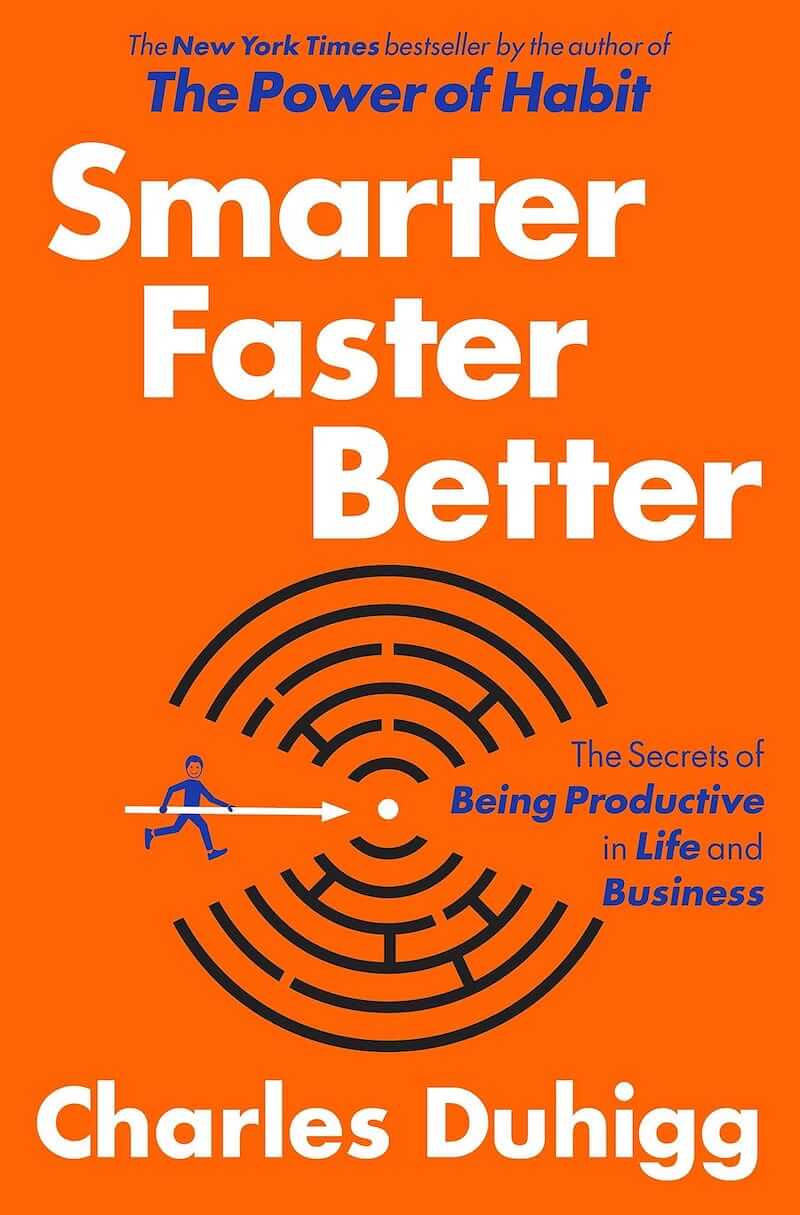
The book “Think and Solve: Eight Rules of Efficiency — Smarter, Faster, Better” by Charles Duhigg explores productivity at the level of the individual, the team, and the organization. The author, known for his work at the intersection of psychology and behavioral sciences, views efficiency not as a set of life hacks, but as a system of thinking and behavior that can be developed.
The book is based on eight key principles that, according to the author, influence performance: motivation, focus, goal setting, decision making, innovative thinking, team management, and other aspects. Each of these principles is revealed through real-life stories, research, and case studies from various fields — from business and education to aviation and sports.
A distinctive feature of the book is the combination of a scientific approach and storytelling. Duhigg explains in detail how people make decisions under uncertainty, how habits are formed, and what mechanisms enable high performance. He shows that productivity is not just about personal efficiency, but also about the ability to work in a team, adapt to change, and make unconventional decisions.
The author emphasizes that there are no universal recipes, but there is a set of principles that can be applied in different contexts. This makes the book suitable both for individual development and for understanding processes within teams and organizations.
Opinion
After reading this book, I had mixed feelings. On the downside: the book's structure is not the best, and the so-called 8 rules are chosen rather arbitrarily. That is, the author selected 8 factors he felt necessary to discuss, although in reality there are several dozen such factors (at least known to me). Also, advice for improving productivity in personal life, business, work, and teams are all mixed together. In my opinion, separate books could be written on business, teams and their management, as well as personal productivity, exploring them in more detail. The title of the book, by the way, also seems purely attention-grabbing.
Despite the drawbacks, I would give this book a decent rating if only because it is not boring to read and is interesting. Plenty of real-life stories with verified examples: from plane crashes and decision-making under stress by pilots to uncovering the secrets of playing poker. Also, the police investigation of a kidnapping, the making of Disney’s “Frozen,” the rescue of an automaker by changing its production according to Toyota principles, which later made that company one of the world leaders, as well as minor changes in the education system in one of the worst schools that significantly improved student outcomes. These and other stories, thanks to the author’s vivid narration, stuck in my head for a long time. Moreover, all eight factors and rules described by the author are indeed explained in great detail.