
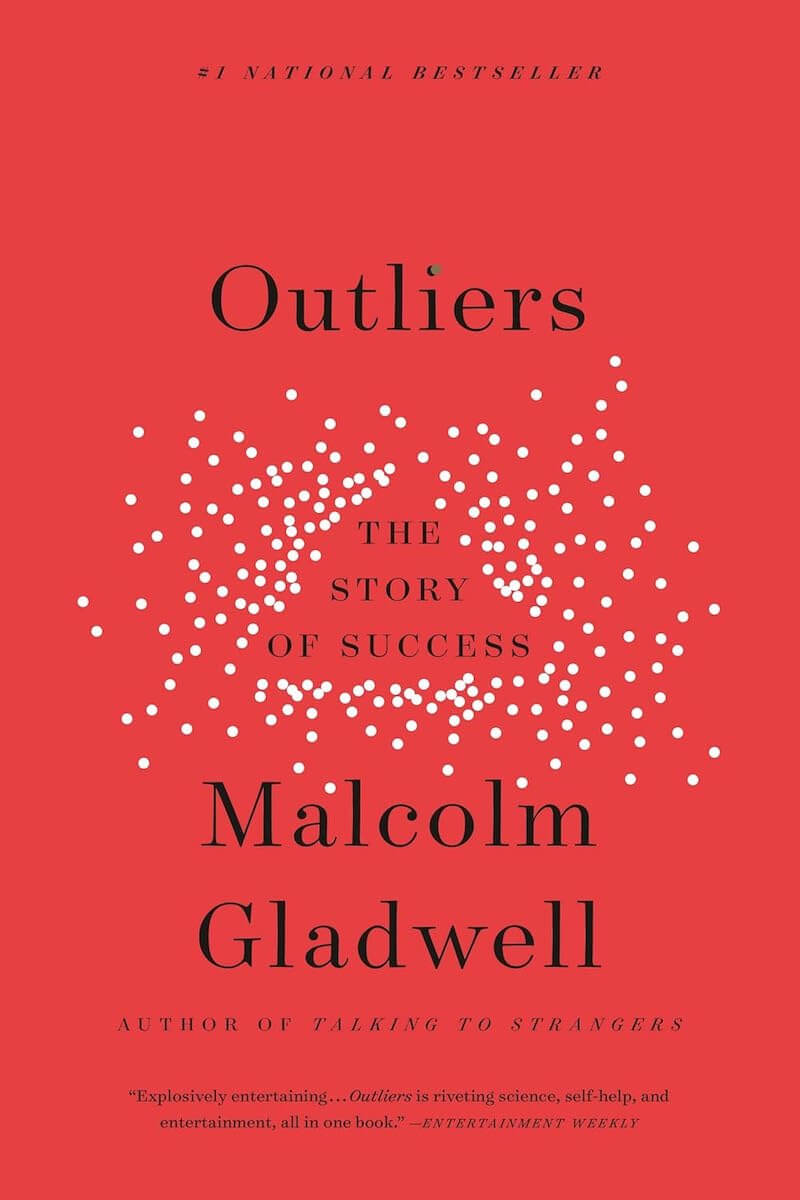
General Overview
Malcolm Gladwell's book "Outliers: The Story of Success" is dedicated to exploring the nature of success and common perceptions about talent, genius, and personal merit. The author calls into question the idea that outstanding achievements are exclusively the result of innate abilities or individual effort.
The book examines success as the result of a combination of factors: social context, cultural characteristics, family upbringing, historical moment, and available opportunities. Gladwell shows that behind the seemingly "random" biographies of successful people, there are often patterns that are rarely noticed upon superficial analysis.
Special attention is given to the role of culture and national traditions. Using specific examples, the author explains how behavioral norms, attitudes toward authority, work ethic, and educational systems can directly influence the professional outcomes of individuals and entire groups. These cultural features are viewed not as advantages or disadvantages, but as conditions that shape behavior and decisions.
A significant part of the book is devoted to the idea of accumulated advantage: small initial differences amplify over time and lead to a substantial gap in outcomes. It also analyzes the influence of generation, birth timing, and historical era on a person's chances to realize their abilities.
The book is written in the format of a popular science study and relies on real stories, statistics, and social observations. It doesn't offer universal recipes for success, but helps to look at it more broadly, moving beyond the individualistic approach and rethinking the role of circumstances in a person's life.
Opinion
It's a general knowledge book that I knew about before. Moreover, I even knew what examples would be there and what the book was about overall. But while reading, the book still regularly surprised me with various interesting facts. I liked the book so much that instead of re-reading a huge summary, I'll listen to its audio version again during my runs. It's a book about how your birth month influences you (but no, not from the point of view of astrology and horoscopes, but purely from the point of view of the morality and rules that we ourselves have built in society). The book analyzes many national characteristics and the mentality of different countries; the book has the answer to the question: why Asians are particularly good at math, dispelling the myth about their mental superpowers, and also why passenger planes flown by Korean ace pilots used to crash very often, as well as an interesting comparison of Robert Oppenheimer with Christopher Langan (the man with the highest IQ in the world). One of the main messages of the book: the importance of luck, the chance to be born in the right generation in the right society at the right time.